6 Months of Freelance: My Honest Take
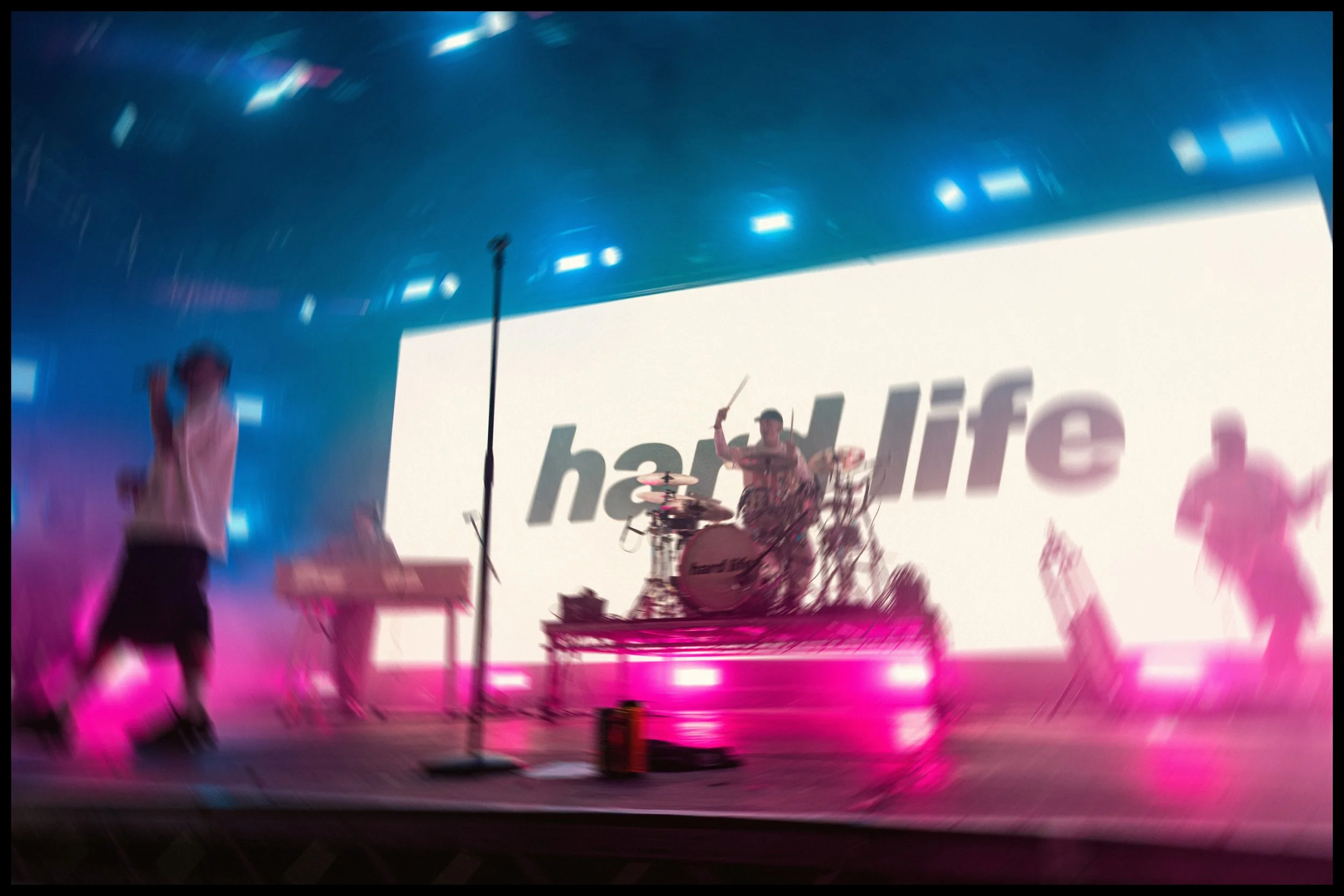
📸 Hard Life, 2025 (Charlie Wright / Northern Exposure)
Last September, I decided to jump entirely into freelancing.
Not because I hated my job, or because I have a vendetta against the 9-5.
In fact, I actually really liked my job. And, felt I was actually half-decent at it.
In a weird roundabout way, having set work hours always made me work harder, both in and outside of work. I’d always felt that, ever since I got an apprenticeship back in 2017.
My evenings and weekends were always spent pursuing different projects (blogging, web design, journalism, photography), and this balance of mental capacity energised me.
I always had lots going on. Partly because I struggled to sit still, and partly because I’m very conscious of how finite life is. Creative outlets are incredibly important. Without them, you make your job everything, which is a one-way ticket to burnout and resentment.
So, if the balance was so perfect - why the f**k did I rock the boat?
Curiosity.
As I approached 25, ready to endure a quarter-life crisis, I knew I wanted to take a few risks. I had been working in the advertising world since I was 16. I was growing cynical of the world we live in. But, crucially, my experience vs age ratio was unique.
I’d set a New Year’s resolution at the beginning of 2024 to be one of those people you see at the front of concerts taking photos. As an avid gig-goer, the idea of this was thrilling. Within a month, I was taking photos with zero experience; within six months, I was covering major UK festivals; and within a year, I was a finalist and runner-up in LCE’s Photographer Of The Year 2025.
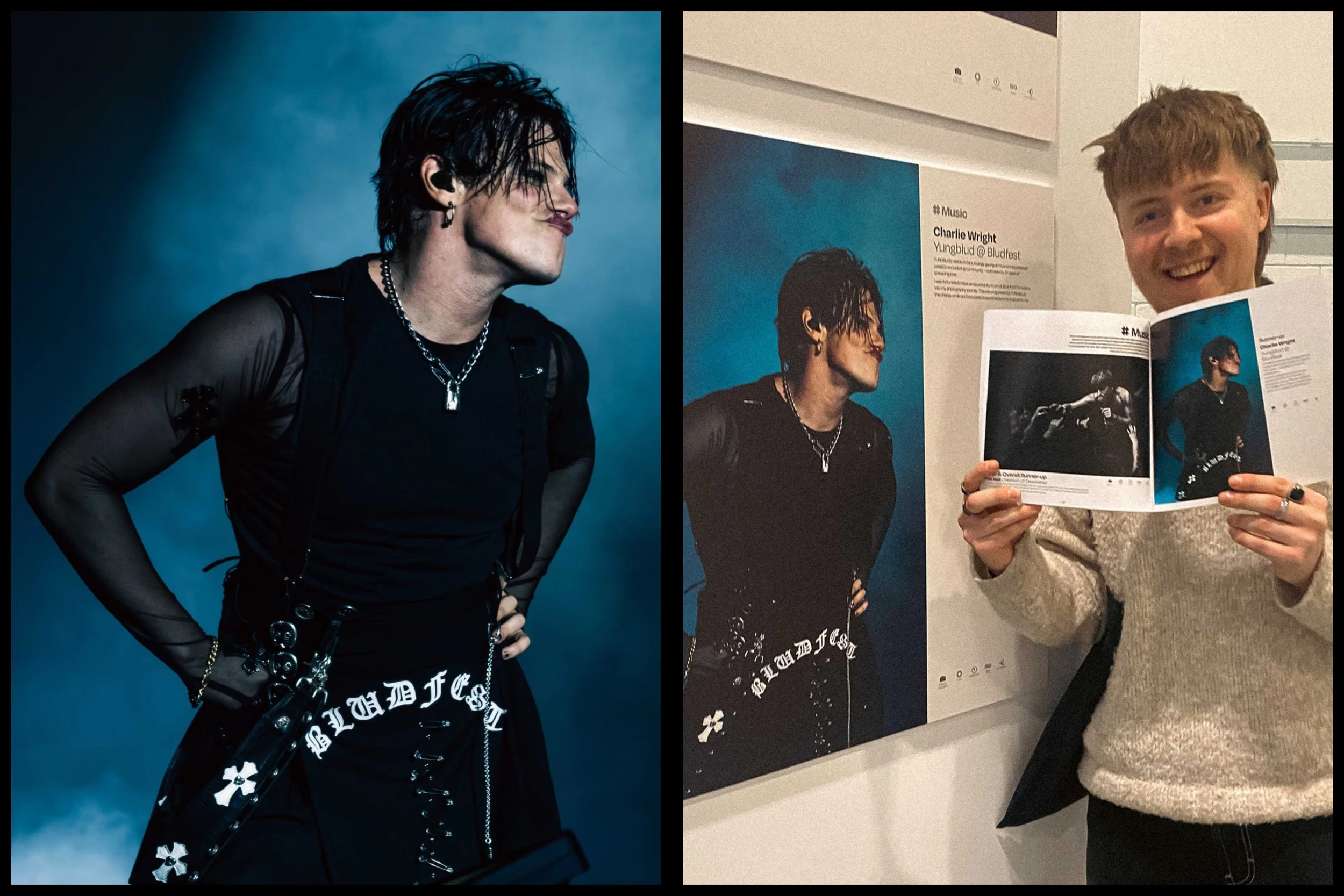
📸 YUNGBLUD, 2024 (Charlie Wright / Northern Exposure)
However, we live in a culture nowadays where these side ventures are frequently encouraged for the wrong reasons. Not as a creative outlet, but as another revenue stream. A stream which is designed to surpass your full-time employment.
And who can blame people?
🏔️ Humans crave purpose.
😵💫 AI is fundamentally reforming society.
🔥 And the world is…on fire. Still.
So, what happens if you turn your creative outlet (or hobby) into a business?
This article is my honest take on what I’ve learnt so far.
1. You need to discover new hobbies 🫠
This probably sounds bonkers. Surely, turning your primary sense of enjoyment, fulfilment and creativity into a job would bring endless happiness? Spoiler - it doesn’t.
Remember what I said? If you make your job your everything, it’s a one-way ticket to burnout and resentment. The same rule applies here as it does to a full-time job. Because, fun fact, this is now your full-time job. Except that what was once your creative outlet is now your source of income.
When it’s only a side venture, it’s being funded monetarily and mentally by something else. Escapism, I think, mainly. For me, it was always trying new things.
To counteract this, I picked up reading and used my newfound flexibility to read most mornings with fresh coffee. Not only did this become a new way to ground myself, but I also found it quite fulfilling, especially since we spend most of our time glued to screens nowadays. That being said, my books of choice so far have included Animal Farm, 1984 and The Handmaid’s Tale. All very bleak, albeit thought-provoking material.
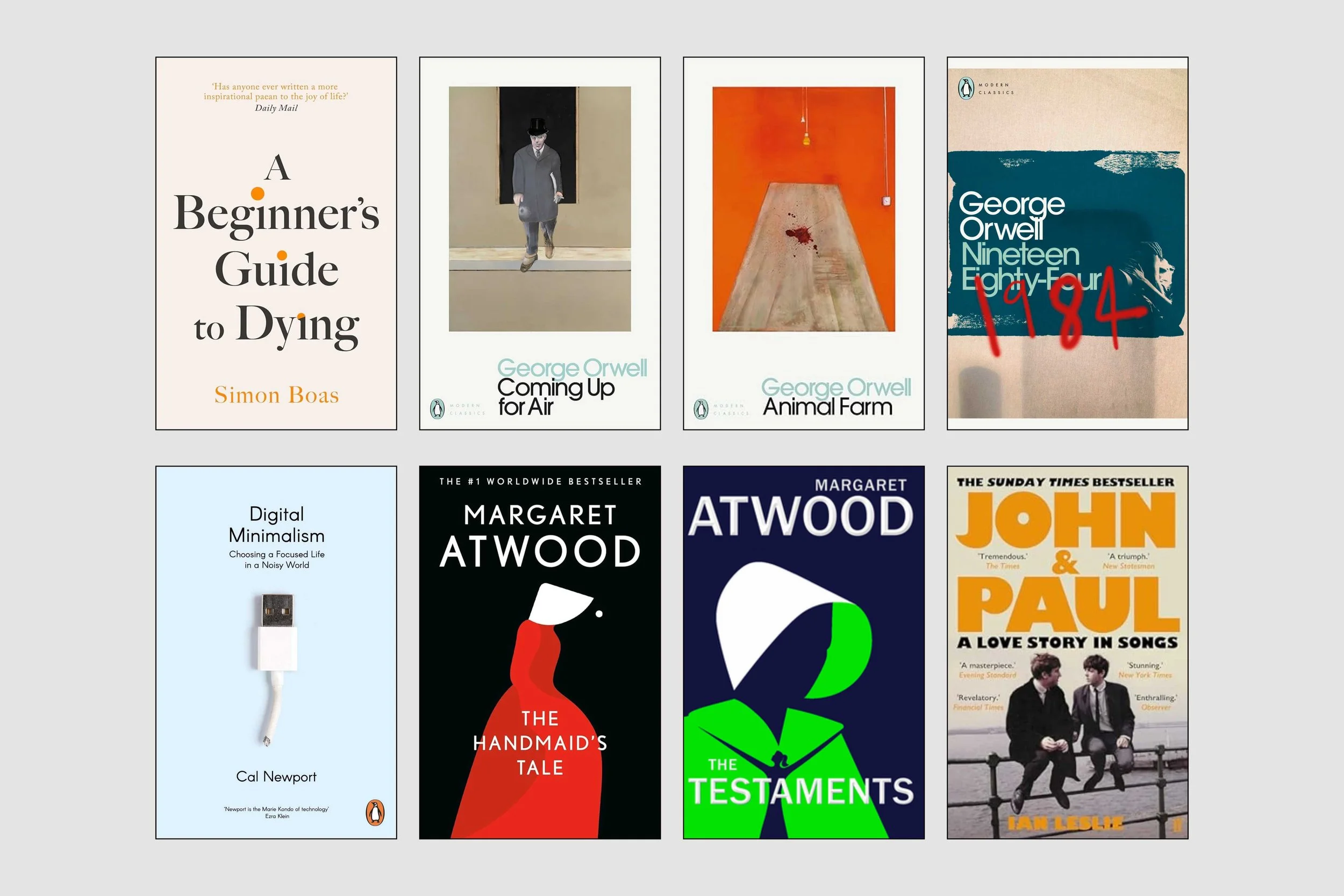
📸 Most recent books
Also, while my focus was on photography primarily, I kept a steady stream of marketing work too. This at least allowed me to diversify things.
Anyway! Without other (new) hobbies, you risk pressure in something that used to bring relief. And when all of your eggs end up in one basket, and things get tough, there’s nowhere else to turn. This is especially important in the world of freelancing because…
2. Your character 🤝 Your brand
Coming from a marketing background, I sort of knew this already.
However, I under-estimated how much of your personal character becomes extrinsically connected to what forms your ‘brand’. The lines become incredibly blurred, very fast. It also means, in many ways, you’re never actually able to switch off from your working life.
While your character plays an important role in any career, in freelancing, it’s magnified tenfold. Because if you’re a sole trader, you (yes, you) are the business. It’s not a nurtured brand with culture and values that employs you; you are it.
This has been one of the hardest parts of the freelance world. I’m not particularly even referring to the fact that there’s no off-switch. It’s more the fact that your personal life is moulded with your professional life, in such a way that can only happen when freelancing. That’s all well and good when things are smooth sailing, but all it takes is a bad day, and you can feel your identity shaking beneath you.
In response to this, I initially started cutting back on my personal social media. The amount of time I’d spend on business social media and trying to sell myself, the thought of keeping up with everything on a separate platform became overwhelming.
After a while, I changed my relationship with social media entirely, at times removing it from my devices and only allowing myself to check periodically.
I’m no stranger to building a personal brand, or an actual brand for that matter. However, when you’re always the selling point, it can become tiring, which leads me onto my next point…
3. It gets lonely 🌗
I’m not really a fan of small talk.
I’d rather debate something existential than discuss the weather.
Those who know me would testify that I’d rather debate the future of humanity in an age of AI while waiting for the kettle to boil, rather than talk about reality TV.
Despite being fairly introverted, I do thrive off other people’s energy.
My biggest apprehension before embarking on this journey was how it would impact my mental well-being. I thought a lot about how I’d no longer be around people. And I don’t mean that I’m now living underground with no communication to the outside world. You still meet clients and peers regularly. But there’s no ‘proper’ ecosystem.
I asked lots of other freelancers how they dealt with this prospect in the months before making my decision, and almost all said the freedom was worth the trade-off.
My way of dealing with this was letting myself be candid with other freelancers, discussing advice, challenges and work with those in a similar position. While not everyone is out to help you, plenty are, and there’s a fantastic community.
I’ve also begun considering co-working spaces to actually put myself back in a communicative environment. The truth is: you realise how important regular interaction is once it’s gone.
Additionally, I wrote a blog a few years back about coping during change, and I certainly employed a few of these tricks too. I pushed myself to keep running in an effort to build a routine, and I continued to listen to my favourite podcasts (real ones, you know it’s always Karl Pilkington) to integrate familiarity.
And on that subject…
4. Timesheets stay 🗓️
I’ve heard many people express their deep hatred of timesheets over the years.
Admittedly, they can be a ballache sometimes. However, I personally love it.
Timesheets have kept me accountable, consistent and motivated.
Just like in the agency world, they also show you juicy data. Who is profitable, who is being over-serviced and how much of your time is being billed.
As an Account Manager, I used timesheets to manage relationships, protect against scope creep and schedule time. Ultimately, challenges would be reported to a senior member of the staff to discuss how we’d approach the situation.
As a Freelancer, I’ve found myself doing all of the same, but the data I’m looking at is informing tangible business decisions I have to take control of day-to-day. There’s nobody to discuss it with. These decisions don’t only affect the business, but land on me personally, and this total ownership is daunting, but part of the fun.
PS. Let’s just say that I have a new appreciation for finance departments. (😂)
Anyway, this all leads me nicely onto the next learning…
5. Time-blocking is crucial 📊
This goes hand-in-hand with timesheets.
Context switching as a freelancer is inescapable, but you can make it manageable.
Many freelancers I’ve spoken to are always scrambling from one thing to the next. And once again, you can hardly blame them. Being a Creative, Strategist, Accountant and Human is a mind-f**k.
Despite kicking off with the best intentions of time-blocking, it quickly faded away when timelines were more important than my sanity. I was jumping all over the place.
After a few months of this, I acknowledged the fuzziness I felt boiled down to excessive context switching. It’s funny because I wrote an entire article on how to mitigate this from happening at my last agency (you can read it here).
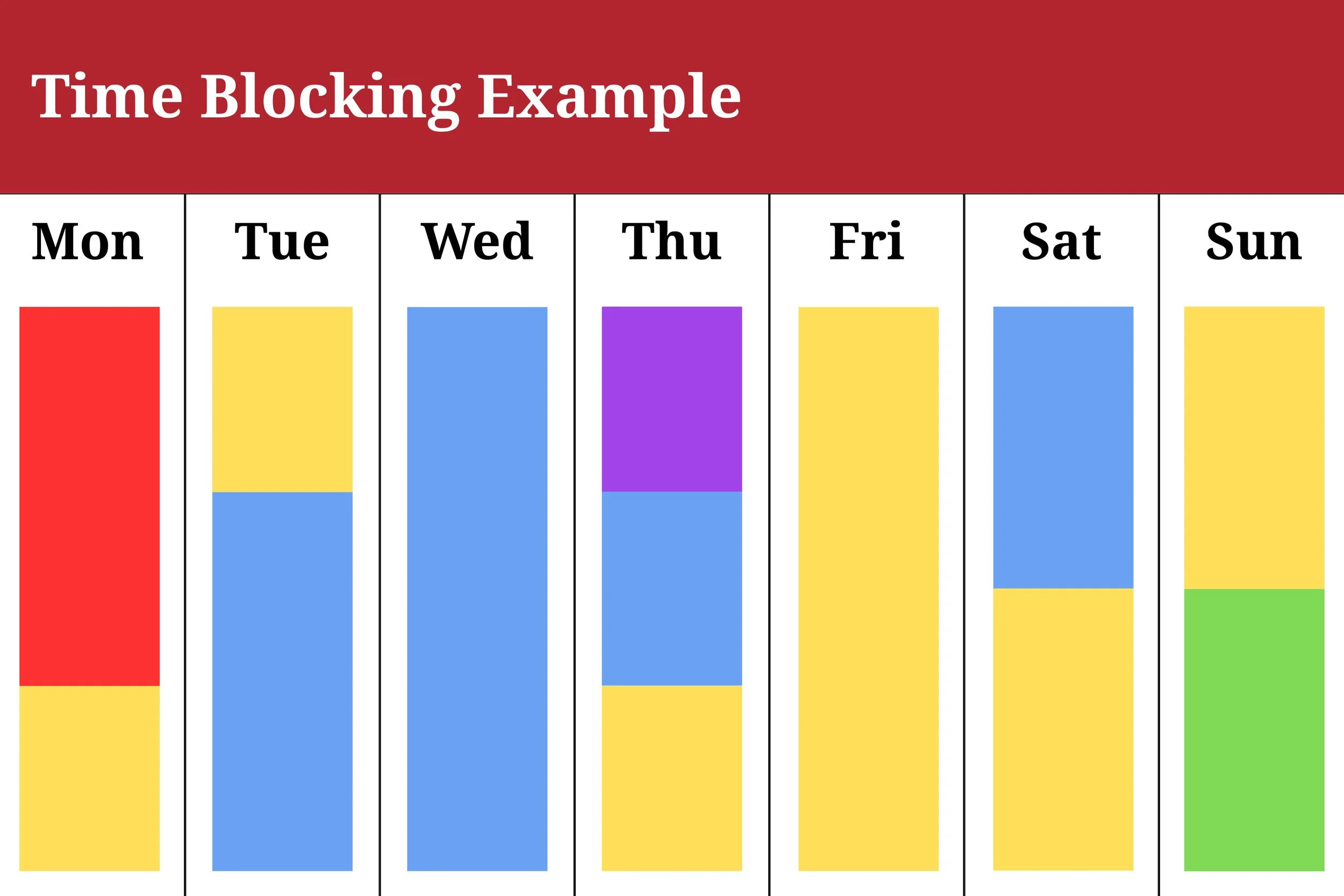
I learnt to be stricter with my time-blocking and set the precedent myself. This led me to dedicate specific days of the week to bundle together marketing and ongoing web projects (both of which had agreed timelines), and then I blocked out other time for photography.
Combining timesheets and time-blocking together is powerful, and makes you better positioned to tackle carrots, because I’ll be honest…
6. Carrots are everywhere 🥕
Before I started my freelance journey, somebody told me to be aware of the carrots.
When I say carrot, I’m referring to opportunities. Do X, and it’ll lead you to Y and eventually Z.
They’re never guaranteed, and almost always involve you taking a risk.
I’m no stranger to this concept. I simply underestimated how many carrots would be sent my way in such a short period of time after joining the freelancing world.
There’s no fixed way to deal with the carrots. Early on, I grabbed every carrot possible. (I should be able to see in the dark!). However, as you move forward, you have to pick and choose which you are willing to take a risk on, for your financial security and sanity.
The rest of it is trial and error.
Some lead you to long-term relationships, whereas others are designed to exploit your good nature. Which is a shame, because I’ve also found that…
7. Kindness can be exploited ❌
I really hate the fact that I’ve added this as a learning, especially coming from the marketing world. It’s almost laughable.
It’s worth saying: this isn’t always the case.
In 6 months, I’ve formed relationships with a portfolio of clients (of all sizes), and the foundation for almost all of those is mutual understanding and trust. However, as I said, carrots are everywhere. If we use a similar analogy here - let’s just say you’ll come across some bad apples, but it doesn’t mean the whole orchard is rotten.
The biggest learning I’ve found is actually returning to something I’d do on a daily basis when I worked full-time. Keep your scope tight and protect yourself.
When I started freelancing, I had these fundamentals set. I wasn’t entirely naive. It’s more when you let your guard down. Remember what I said earlier, your personal character is extrinsically linked to your business. That applies here too.
On a more positive note, something great about freelancing is…
8. There’s plenty of work to go around 🩵
The job market is in a very precarious place at the moment.
Yet, there is still enough work to go around. In fact, it seems the freelance/contract world is booming in this climate.
I learnt many years ago that sometimes it’s more efficient to split a workload than attempt to do it all yourself.
That mindset hugely applies to freelancing. You’re all in the same boat. So, why wouldn’t you share the work and help eachother succeed? All of you have unique skill sets, experiences, and backgrounds, and bringing them together creates results!
Also, this level of collaboration scratches that ‘team itch’ you sometimes crave when freelancing becomes lonely.
Without it, that ugly word from earlier can raise its head again: burnout.
Everything I’ve spoken about is a lot to digest. That’s why…
9. Breaks are essential ✈️
I don’t mean jet off to a new country every weekend (although technically you could do that if you’re working remotely), but taking frequent breaks in every way.
Freelancing is stressful, but it’s also very rewarding. Everything is down to you. The fact that there are no excuses is also what makes it fulfilling.
To begin with, I hardly took any time to rest. I quickly fell out of the 9-5 schedule. I would complete the same volume of work every day (although usually afternoon onwards), and then my spare time was focused on growing the business.
Combining music photography and marketing gave me a very varied schedule. Sometimes I’d work through the early hours of the morning or on a web project during ‘typical’ work-hours, othertimes I’d fizzle out for a few days before powering through everything. This all meant that taking each week as it came was imperative.
With unpredictable work patterns, it’s easy to never rest. I’ll admit having a ‘day off’ or a ‘half day’ on random days of the week is still a bizarre feeling.
Aside from that, I took a mini-break away to Amsterdam in January, and it really helped me come back to life.
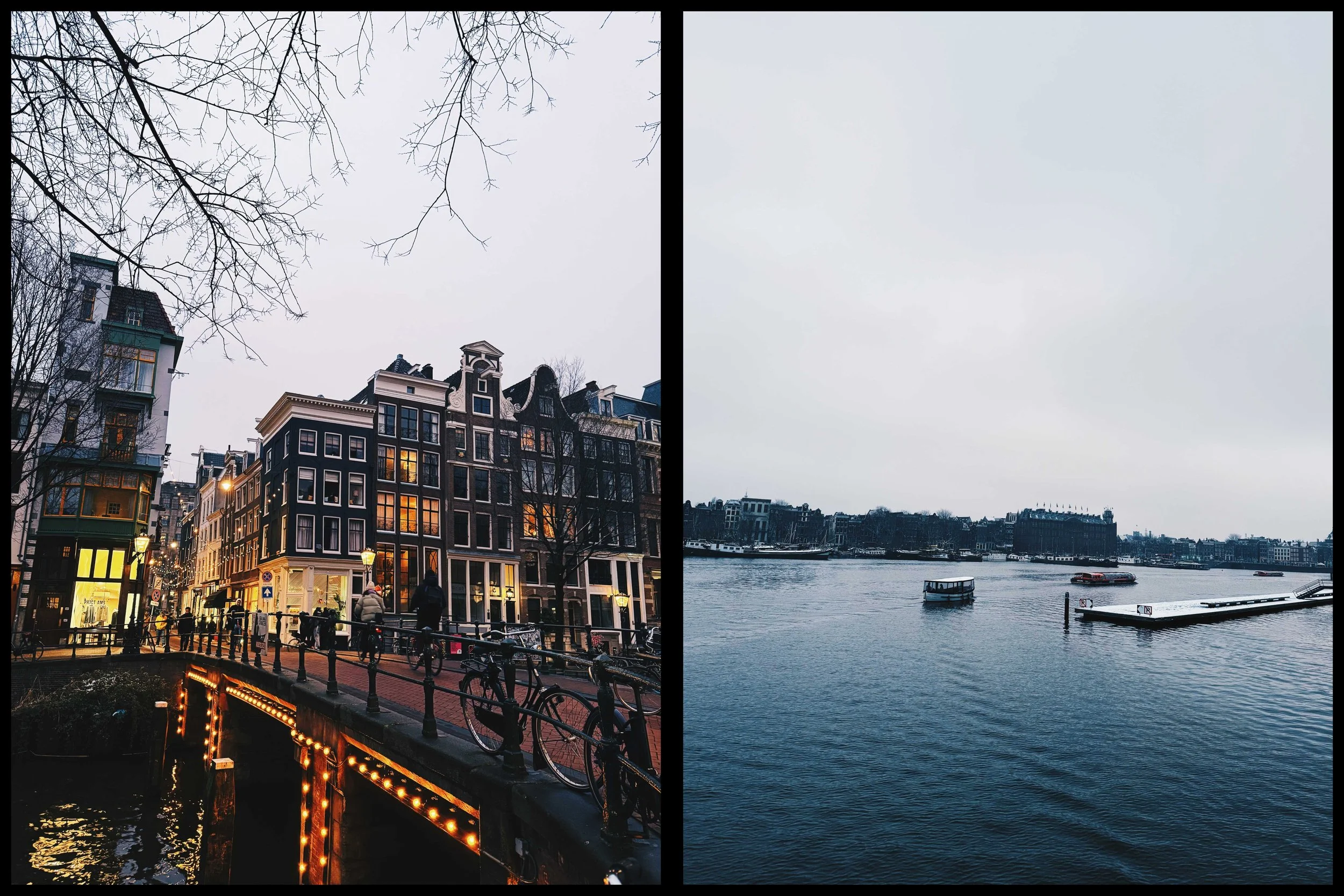
📸 Amsterdam, 2026
While away, I had a flurry of enquiries. I spent the final day of the trip responding to emails and messages. It proved to me that taking some time for yourself won’t collapse your business; instead, the universe rewards you. Or, maybe I just timed it right (😂).
This very spiritual realisation also leads me to the final learning…
10. You’ll reflect on life 🫵
One of the primary reasons I went freelance was to push myself.
With that comes reflection, and it’s really monumental.
When I’ve transitioned from job-to-job previously, you usually enter a reflective period that stems from not having the weight of work on your shoulders. Even if you enjoy your job, it’s difficult to take a step back when there are so many moving plates to keep spinning.
The flurry of emotions you experience when freelancing, combined with a greater control of your time, naturally leads to a much deeper reflective state.
As a 25-year-old, I’ve really appreciated how fortunate it is to have this time.
It also made me finally click with The Beatles, after all of this time. I always find it intriguing to see what music you instinctively turn to during phases like this, and what begins to resonate.
Conclusion 🚀
So, here we are. 6 months in, and it’s been a whirlwind.
There are so many other learnings, particularly around running a business, that I could’ve gone on forever. These are simply the most poignant #10.
To be honest, I think people have a glamorised view of freelancing.
It isn’t all freedom, flexibility and fun.
But, it’s certainly character-development.
I wanted to document my honest take, as someone fortunate to try a full-time career and pivot to freelancing at a young age, for anyone who is debating taking the leap.
It’s challenging, but fulfilling. It’s risky, but rewarding.
The take-home message: ultimately, it won’t be for everyone.
I’ll report back after another 6 months!